
Resources
Installation Process
Installation Process
Installing a traffic garden, whether called a safety town, safety city, or traffic playground, is a step-by-step process when supported by clear plans, the right materials, and an experienced contractor. Traffic Garden Designs helps guide the process, including connecting you to qualified contractors, so your project moves efficiently from layout to finished installation.
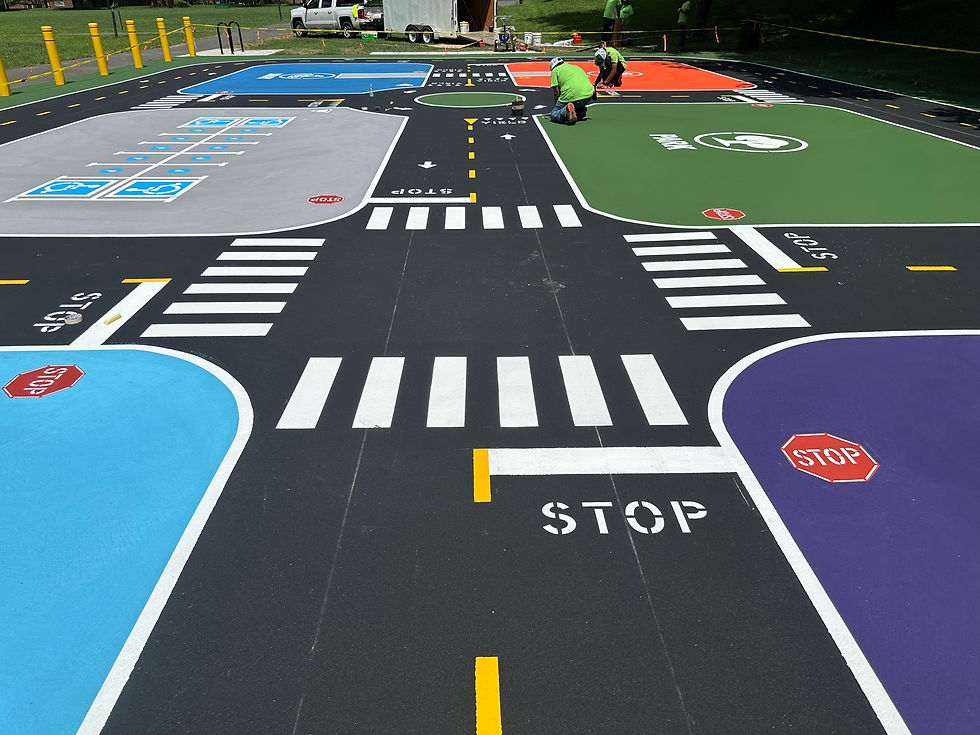
What to Expect: From Plan Set to Installed Traffic Garden
The process moves from detailed plan sets to a finished layout through a clear sequence of contractor pricing, site preparation, layout, and installation. Each step builds on the last, creating a path from discussion to a fully realized traffic garden.
Contractors supply the tools, materials and equipment. They then use the drawings to measure, mark, and apply those materials so the design is accurately translated to the surface. Work typically begins with thorough surface preparation and any needed repairs, followed by careful layout marking and on-site verification before permanent materials are applied. This staged approach allows adjustments to be made early, reduces the risk of errors, and ensures that striping, color areas, and markings align with the plan.
Materials are applied in sequence and attention to detail at each stage supports a clean finish and a layout that is installed as intended. Once installation is complete and dry, the traffic garden is ready use. With the right materials and solid workmanship, the site performs well from day one and continues to hold up over time, requiring only minimal, routine maintenance to keep it looking and functioning at a high level.

Working with Your Contractor: Roles & Expectations
Traffic garden installation is typically carried out by experienced striping or surface contractors familiar with pavement coatings, layout methods, and field application. They bring the equipment, materials knowledge, and technical skill needed to translate the plan set into a clean, accurate installation. Their expertise ensures crisp markings, consistent color, and a finished layout that looks right and rides well.
Traffic Garden Designs supports this process with clear, contractor-ready drawings and guidance that streamline communication from the outset. The plan set is designed for straightforward pricing and minimal guesswork, allowing the contractor to focus on execution while staying aligned with the design.
If you are looking for a contractor, we encourage you to get in touch. While we do not provide installation services or guarantee availability, we can help connect you with experienced local contractors through the SealMaster franchise network who are familiar with the specified products.
Once a contractor is selected, your role is to coordinate dates, confirm site access, and ensure the contractor knows who to contact if questions arise. Staying available during installation, especially during layout and early stages, helps address adjustments early. It is also important that everyone stays aware of weather conditions and has a plan to pause or reschedule work if conditions change.
With clear communication and coordination, the installation runs more smoothly and the final result reflects both the design intent and the quality of the work on the ground.

Planning: Coordination, Scheduling & Readiness
Even before installation begins, taking time to align on scope, materials, and timing with your contractor sets the project up for success. Traffic Garden Designs works with you to confirm the final layout, review site conditions, and ensure that all materials and drawings are clearly understood before work starts. This early coordination helps avoid confusion in the field and keeps the installation aligned with the intended design.
It is also important to plan how the site will be accessed and used during installation. This includes confirming that the area can be temporarily closed, identifying where materials and equipment will be staged, and making sure vehicles and other activities are kept off the surface while work is underway and during the drying stage.
Scheduling should account for weather conditions, site availability, and any required surface preparation. Repairs such as crack sealing or patching should be completed in advance, and sufficient time should be allowed for base coats, color coatings, and striping to properly cure. Rushing this stage can affect both appearance and long-term durability.
Clear, practical planning at every stage helps avoid delays, reduces rework, and allows the installation to proceed efficiently. With the right coordination in place, the project can move smoothly from layout to a finished traffic garden that performs well and looks as intended.